

Plenty & Co Manufacturing
Reference
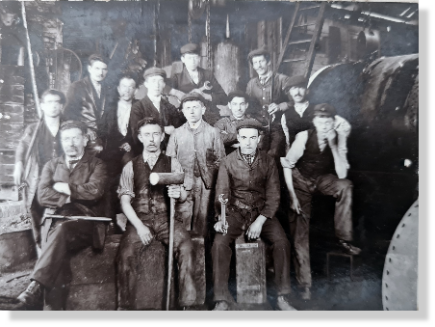
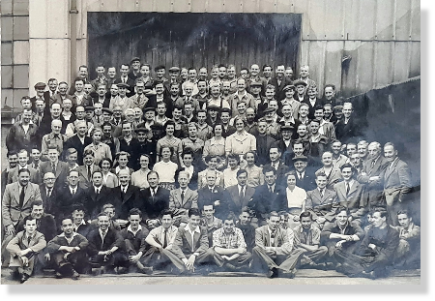
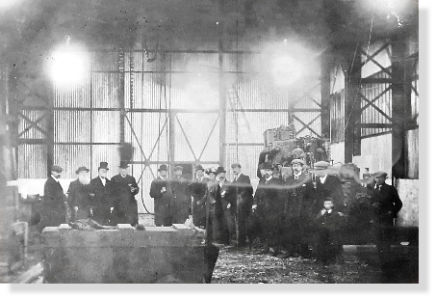
Three pictures from different times.
Top left a group of Plenty workers. Could be Foundry men or perhaps boiler makers
Top right a later 60's picture of the Plenty staff assembled for a group picture. By this time the factory had moved and no longer made boilers or steam engines. The work force was quite considerable and the business had moved on.
Left, the opening of the "New" Boiler shop in Kings Road which, when Plenty's passed over the manufacture of Oil Engines became the home of the newly formed Newbury Diesel Company..
The handwritten title that accompanied the photograph said;
"Taken at night by the Lucas Incandescent Light"
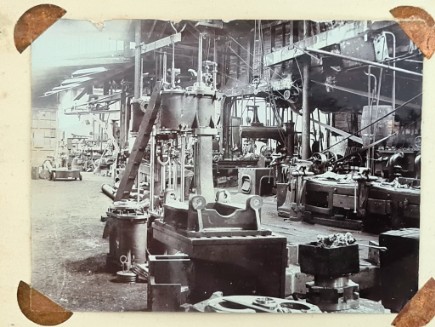
The following pictures from a recently discovered photo album are shown as found, along with the handwritten description of the various subjects.
They relate mainly to engines built for powered craft of the day.
The album is the property of a local farmer who happened to have it on display. The farmer is Neville Perris of Rookery Farm, Woolton Hill. They had an open day as part of the open Studio scheme and with permission from the owner, I thank him and and his wife, also Jim Bradshaw a local photographic expert, for taking the trouble to photograph them and post them so that I could use them here.
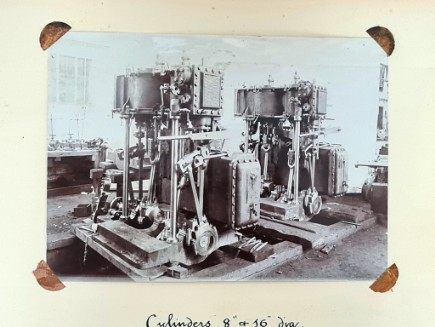
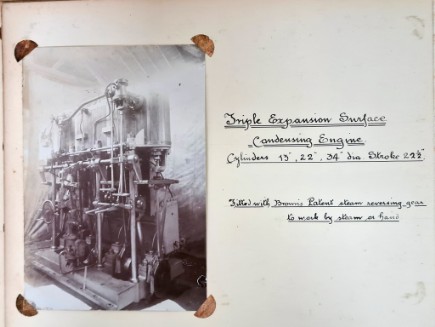
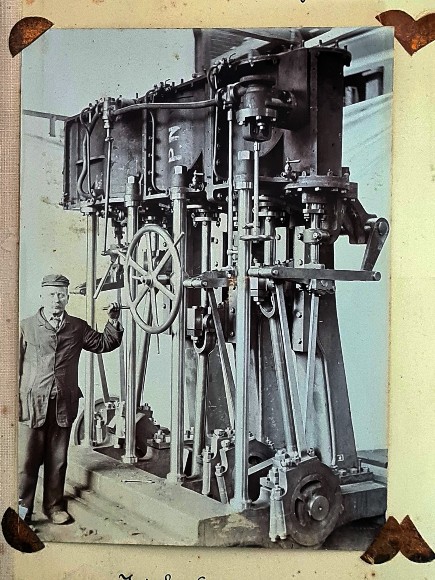
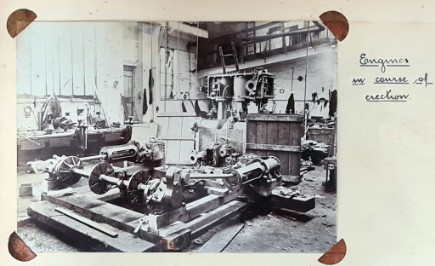
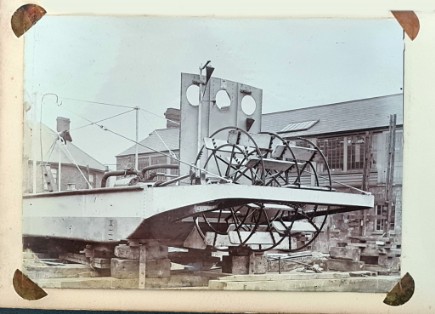
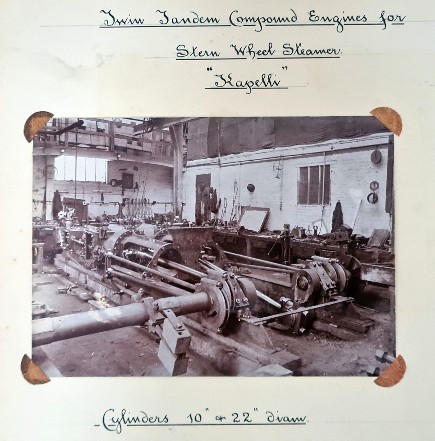
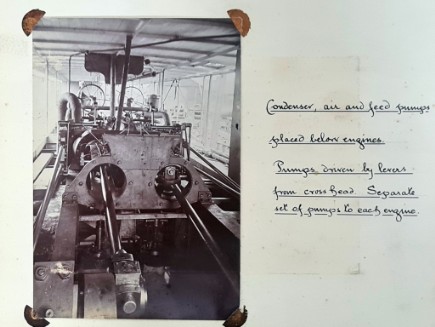
These further pictures below are of interest in that a craft named "The Rose", was fitted with two Plenty steam engines driving twin screw propellers.
It traversed the country and is shown en route and during a stop over at Newbury, the home of the engines, where it tied up at the Wharf on the Kennet & Avon canal
Not sure what the purpose was, possibly to publicise the canal or more likely the steam engines that were fitted to it
Historically, the Kennet and Avon Canal comprises three waterways, the Avon Navigation from Bristol to Bath (opened in 1727), the man-made canal section from Bath to Newbury (opened in 1810), and the Kennet Navigation from Newbury to Reading (opened in 1723).
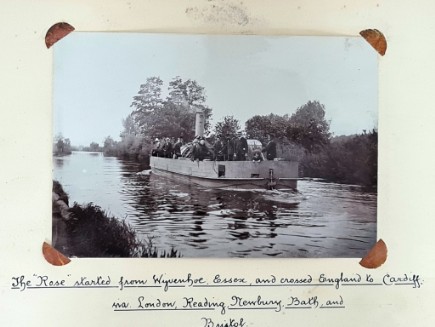
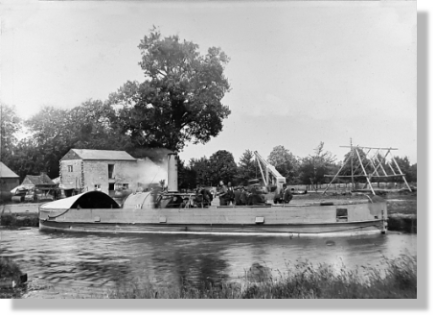
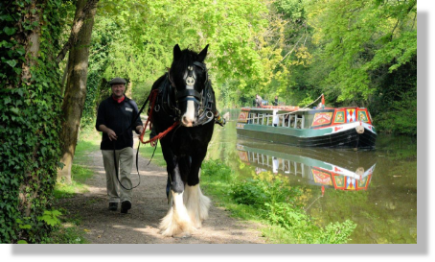
The Kennet and Avon canal still has a narrow boat which carries the name Rose. It sounds as if it had some relationship with the Plenty steam engine driven craft. Somehow though i think that might be wishful thinking on my part. Modern Rose is used for day trips and towed by horse along the tow path.